In high-end polymer extrusion and melt delivery systems, the precision of temperature control directly determines the physical properties and surface quality of the final product. As the “heart” of the entire extrusion line, the melt gear pump performs the core functions of building pressure, maintaining a steady flow, and ensuring precise metering. However, polymer melts are extremely sensitive to temperature, and the choice of pump heating method not only determines whether the equipment can start up normally but also profoundly affects the rheological properties of the melt and the stability of the extrusion pressure.
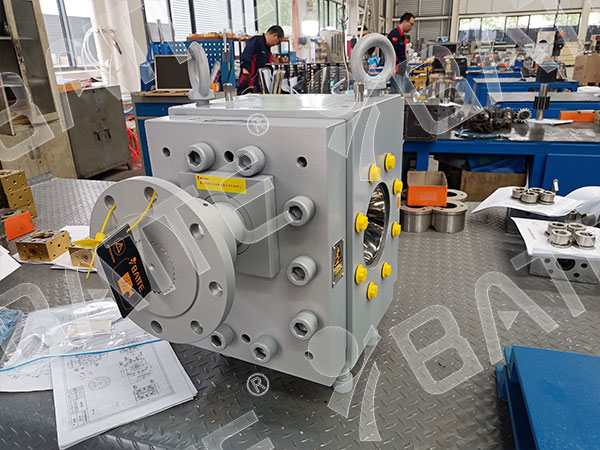
Why do melt pumps demand such high standards for heating methods and temperature uniformity?
Polymer materials (such as PET, PA, PC, PLA, etc.) exhibit typical “viscosity-temperature dependence” and are poor thermal conductors. Within the processing temperature range of 200°C to 350°C, even a temperature difference of just 2°C to 3°C can cause significant changes in melt viscosity.
Melt gear pumps operate on a positive displacement principle. When the gears mesh, if the pump body is heated unevenly, a significant temperature gradient will form between the melt near the pump walls and the melt in the central region. This temperature gradient can lead to:
Differences in flowability: Localized increases in viscosity can increase the operational load on the equipment and even cause the machine to stall; conversely, excessively high local temperatures can lead to thermal degradation, carbonization, or the formation of crystalline particles in heat-sensitive materials.
Fluctuations in volumetric efficiency: Uneven viscosity alters the leakage rate through the gear clearances, causing the originally set rotational speed and flow rate—designed to maintain stable pressure (typically requiring an extrusion pressure of 10–35 MPa)—to lose their linear relationship, resulting in dimensional variations in the final extruded product.
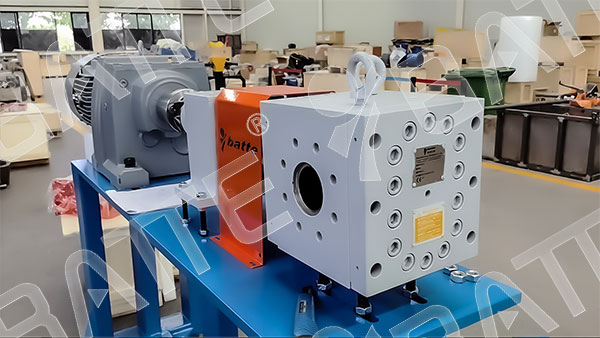
1. Electric Heating System: Direct, efficient, and suitable for small- to medium-scale temperature control
Working Principle: Electric heating typically uses heating rods or heating coils that are directly inserted into or wrapped around holes reserved in the pump body of the melt gear pump. Joule heat generated when an electric current passes through the resistance wire is conducted through the metal pump body to the polymer melt inside.
Process Advantages: The system structure is relatively simple, requiring no external piping or temperature control stations. Installation and maintenance are convenient, heating-up speed is fast, and initial equipment investment costs are low.
Pain Point Analysis: Heat radiates outward in a “point-like” or “linear” pattern, resulting in higher temperatures near the heating elements and lower temperatures in distant areas. Although the pump body is made of high-quality alloy steel for heat conduction, internal “hot spots” are difficult to avoid under extreme operating conditions. For heat-sensitive plastics such as PVC that are highly prone to decomposition, electric heating can easily cause material degradation.
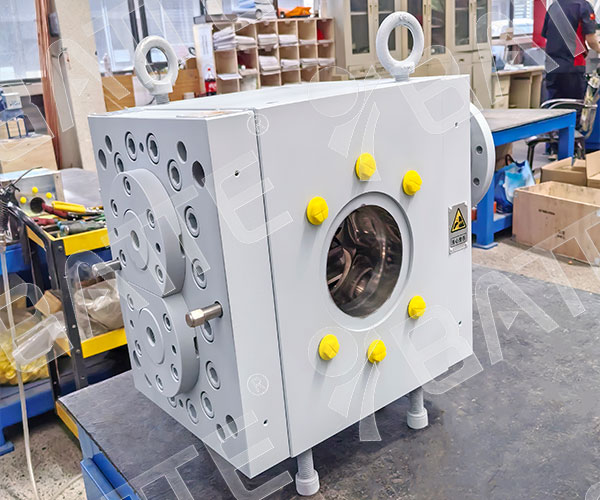
2. Thermal Fluid Heating System: Ensures optimal temperature control and uniformity, suitable for large-scale continuous production
Principle of Operation: To heat the heat transfer medium, a complex jacket or circulation channel must be machined inside the melt pump housing. An external, independent temperature control unit (TCU) heats the heat transfer oil to the set temperature, then pumps it into the pump housing channels for continuous circulation, achieving heat exchange through “surface” contact.
Process Advantages: The heat transfer fluid possesses extremely high thermal capacity and fluidity, ensuring that the temperature difference across the entire pump housing surface is maintained within ±1°C. Absolute temperature uniformity is its most distinctive feature. Furthermore, when high-viscosity materials generate excessive “shear heat” due to intense shear forces within the gear pump, the heat transfer fluid circulation system can act as a cooling mechanism, preventing material overheating.
Challenges: A dedicated heat transfer fluid circulation system is required, resulting in high initial equipment investment; the system involves piping connections that demand strict high-temperature sealing technology, and it requires periodic replacement of the heat transfer oil and maintenance of the piping.
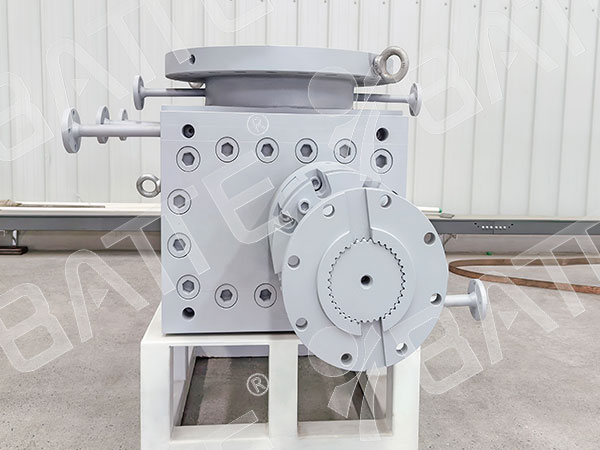
Recommended Applications for Electric Heating:
Suitable for pelletizing general-purpose plastics that are not highly temperature-sensitive (such as PE, PP, PS, etc.) and for conventional pipe/profile extrusion; it is also ideal for modified extrusion processes where space is limited and it is not feasible to install thermal oil piping.
1. Small- to medium-scale production lines: Such as plastic extrusion, laboratory R&D, and small-scale modified pelletizing lines. In these scenarios, production volumes are low and operating conditions are flexible. Electric heating offers low initial investment, convenient operation, and eliminates the need for complex heat transfer fluid circulation systems.
2. Scenarios requiring rapid heating and frequent temperature adjustments: For example, production lines that switch between multiple product grades. Electric heating can achieve rapid heating and cooling within a short timeframe, offering fast response times that reduce downtime during grade changes and improve production efficiency.
3. Processing of low-viscosity materials: Such as common plastics like PVC and PE. These materials have relatively lower requirements for temperature uniformity, making electric heating a more cost-effective solution with lower maintenance costs.
Scenarios where heat transfer fluid heating is recommended:
1. Large-scale continuous production: For example, polyolefin plants with a capacity of 300,000 tons per year or more, and chemical fiber spinning production lines. In these scenarios, multiple melt pumps and screen changers must operate in coordination. Thermal fluid heating enables temperature synchronization across the entire production line, preventing uneven melt flow caused by localized temperature variations. It is particularly suitable for high-load, long-duration continuous operation conditions.
2. Processing of high-viscosity, heat-sensitive materials: Such as rubber, silicone, and engineering plastics like PEEK. These materials are sensitive to temperature fluctuations and prone to degradation from overheating. The uniformity of thermal fluid heating effectively prevents localized overheating, ensuring stable melt performance.
3. Applications with high explosion-proof requirements: Thermal fluid heating can enhance production safety through explosion-proof thermal fluid furnaces and piping designs, making it suitable for industries with strict explosion-proof requirements, such as chemicals and pharmaceuticals.
Email: sale@meltpump.com
WhatsApp: +86 158 3833 1071