The Key to Stable Underwater Pelletizing: Melt Pump + Screen Changer Combination
Underwater pelletizing is the preferred granulation process for modified plastics, engineering polymers, TPU, PET recycling and compounding. Yet many production lines struggle with recurring issues: fluctuating melt pressure, uneven pellet size, tails, agglomerated pellets, frequent die plate blockage and unplanned shutdowns during screen replacement. Most of these pain points trace back to unstable melt delivery and insufficient filtration protection. The proven solution is a matched combination of melt pump (gear pump) and continuous screen changer.
Why Underwater Pelletizing Is So Sensitive to Pressure Variation
Unlike strand pelletizing, underwater cutting happens right at the die face. Molten polymer is extruded through tiny die holes, sliced by high-speed rotating knives and immediately quenched in process water. Even minor pressure spikes or flow pulsations will change extrudate velocity, creating oversized pellets, fine powder, tails or bonded pellets. Pressure swings also accelerate die plate clogging and shorten service life. For recycled materials loaded with contaminants, this instability becomes far worse and limits continuous 24/7 operation.
The extruder’s core job is plasticizing and conveying; it cannot maintain ultra-steady volumetric output alone. Screw speed fluctuation, feeding variation, melt temperature drift and impurity accumulation all trigger pressure instability downstream. That is exactly where the melt pump and screen changer work together as a stable process control unit.
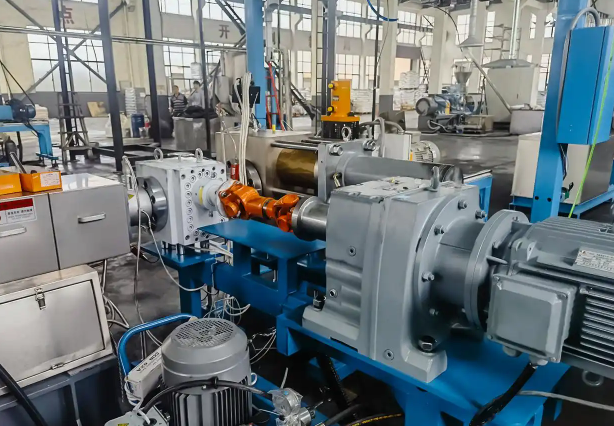
Melt Pump: Precise Metering to Lock Stable Melt Flow
A melt pump is a positive-displacement gear pump installed after the extruder. Its core mission is to separate the metering function from the extruder.
It delivers precise, constant volumetric melt flow, isolating downstream pressure fluctuation from extruder feeding instability.
It builds stable backpressure for the screen changer and die plate, smoothing pulsations before the melt reaches filtration and cutting sections.
It reduces extruder load, lowers shear heat and shortens polymer residence time, minimizing thermal degradation for heat-sensitive materials like TPU.
It stabilizes throughput, so pellet weight and size stay consistent even when raw material bulk density varies.
A melt pump alone, however, cannot block contaminants. Carbon residues, metal debris, foreign particles and degraded polymer will still travel toward the die plate, causing blockage and expensive downtime. This is why the melt pump must work with a reliable screen changer.
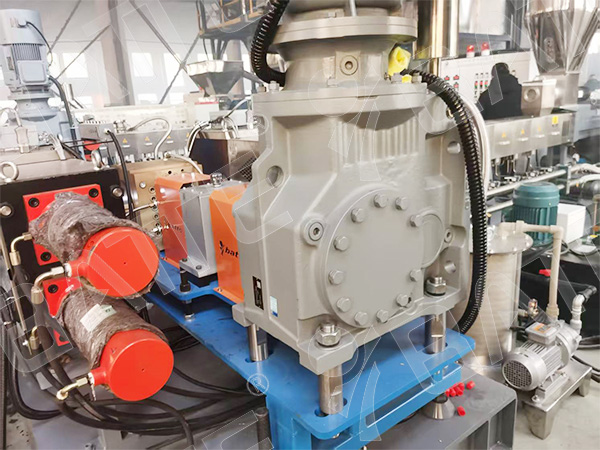
Continuous Screen Changer: Melt Filtration & Non-Stop Protection
Positioned after the melt pump, the continuous screen changer acts as the process gatekeeper.
It filters out impurities, carbon specks and foreign contaminants to protect die holes, knives and the melt pump itself from damage and blockage.
Continuous dual-plunger / dual-column design enables screen exchange without stopping the line. With proper pre-venting and gradual filling, pressure fluctuation during screen swap stays minimal, avoiding pellet defects during changeover.
It maintains consistent melt cleanliness for food-grade, optical and high-performance engineering pellets.
It extends die plate life and reduces maintenance frequency, especially critical for rPET, regrind and heavily filled compounds.
A standalone screen changer has limits too. If incoming melt flow surges from the extruder, pressure will spike sharply as the screen pack loads up, creating the same pellet quality issues operators want to avoid.
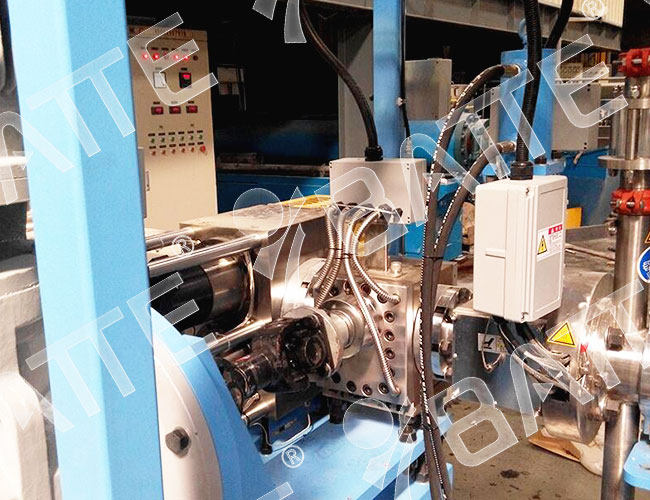
Synergy: Melt Pump + Screen Changer Is More Than Sum of Two Units
This series layout creates a closed stable control zone for underwater pelletizing:
Extruder plasticizes the polymer.
Melt pump meters steady flow and stabilizes pressure before filtration.
Continuous screen changer removes contaminants with low pressure fluctuation during screen change.
Clean, uniform melt enters the die plate for consistent underwater cutting.
The combination solves two root failure modes at once: low instability and melt contamination.
Production gains include:
Uniform pellet dimension, fewer fines and tailing pellets
Far less unplanned downtime
Longer die, cutter and screen service life
Wider processing window for recycled and filled polymers
Stable production during long-run continuous campaigns
Lower reject rate and higher overall equipment efficiency (OEE)
Tips for Matching the Set-Up for Your Underwater Pelletizing Line
For recycling, rPET, mixed regrind: Choose continuous backflush or dual-column screen changer with matched large filtration area.
For TPU, elastomers and heat-sensitive materials: Select low-shear melt pump and low-surge screen changer to avoid melt degradation during screen change.
For high-output compounding lines: Match melt pump displacement and screen changer capacity to your maximum throughput.
Keep melt channel design short and streamlined to reduce dead zones and carbon buildup.
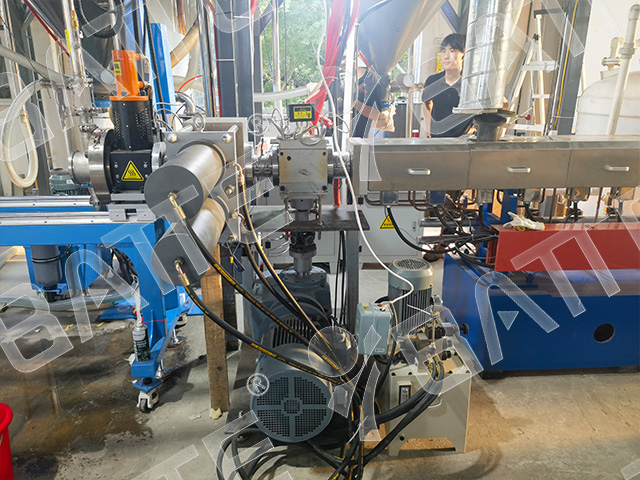
Underwater pelletizing quality is decided before the melt reaches the cutter. Investing in a properly matched melt pump and continuous screen changer is not an optional upgrade — it is the foundation for stable, profitable long-run granulation. Many lines improve pellet consistency and cut downtime by 30%+ after upgrading to this paired solution.
Email: sale@meltpump.com
WhatsApp: +86 158 3833 1071